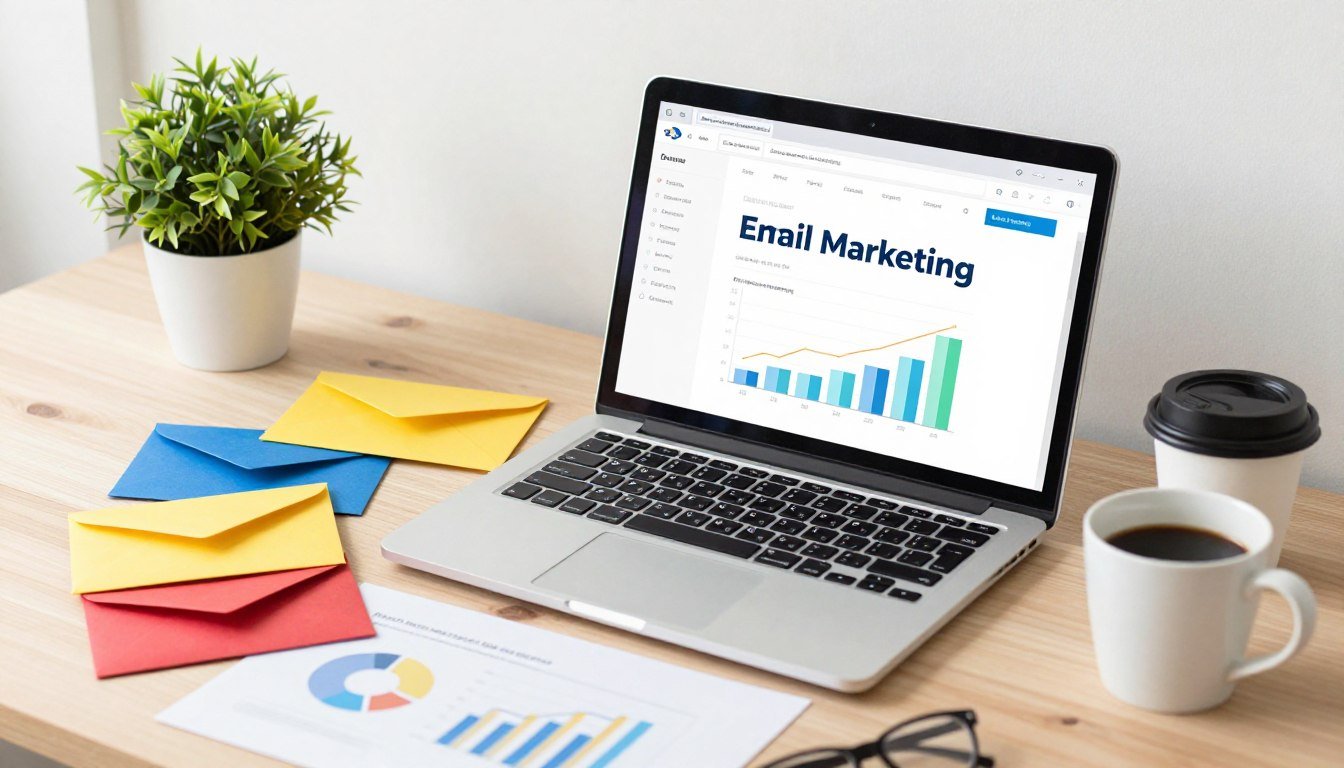
A small business can use email marketing to send a welcome message, useful update, or timely offer to people who want to hear from it. That steady contact can help you build customer relationships without relying on a social platform to reach your audience.
A useful plan starts with what customers need, not with how often you can send a message. Each email should give people a clear reason to read, reply, visit, or buy. Your business can build trust by keeping that promise over time.
You will find a practical path from choosing a goal and growing an audience to sending relevant messages and learning from results. The steps can fit a small team, even if you handle marketing between other jobs. Expect a clear, manageable approach, starting with how the channel works.
Key Takeaways
- Start with a clear purpose and a willing audience.
- Send messages that match subscribers’ needs and interests.
- Use an ESP to manage signups, campaigns, and results.
- Measure actions that connect to your business goal.
- Protect trust with honest messages and easy opt-outs.
What Is Email Marketing and How Does It Work?
A subscriber signs up on a business’s website, receives a welcome message, and later gets an update relevant to their interests. Email marketing is using email to send commercial or informational messages to potential and existing customers.
The basic path is permission, a relevant message, and a recipient’s choice of what to do next. A person signs up, the business sends messages through an email service provider (ESP), and the recipient may click, buy, reply, or unsubscribe.
Segmentation means dividing subscribers into groups so you can tailor messages to their interests, behavior, or relationship with your business. This can make a campaign more useful than sending the same note to everyone.
Ray Tomlinson sent the first networked email message on ARPANET in 1971. In 1978, Gary Thuerk sent an unsolicited marketing message to about 400 ARPANET users and later said it generated $13 million in sales.
That early mass message was not a model for responsible marketing. Permission and relevance now help distinguish useful digital marketing from unwanted email. Those mechanics lead to a practical question: why might a small business choose this channel?
Is Email Marketing Worth It for a Small Business?
A local shop can use an opted-in list to announce a seasonal offer without relying on a social platform to show every follower the post. Direct contact gives a business another way to reach customers and support customer loyalty.
Email can help you personalize messages, track responses, and encourage repeat purchases. You control the subscriber relationship, though people can still unsubscribe or ignore a message. Clear goals and relevant content matter more than sending often.
Litmus reporting indicates that 35% of companies see returns of $10-$36 for every $1 spent on email. An industry estimate puts email marketing ROI at 3,600%, but neither figure promises what your business will earn.
The global email marketing market was valued at $8.3 billion in 2023 and projected to reach $18.9 billion by 2028. Global email users were projected to reach 4.97 billion by 2028, while daily users were expected to increase by 500 million by 2027.
One estimate says 99% of email users check email at least once daily. Another reports 60% of consumers prefer email among communication channels, and 59% say marketing emails influenced purchases. One study found email increased conversions from social media posts by 70%.
These figures describe broad trends, not a small business forecast. Audience quality, message relevance, and execution shape results. If you have no clear reason to email, first create a useful offer and permission-based audience.
The potential is real, but it depends on value for the reader. Different message types can deliver that value in different ways.
Which Types of Marketing Emails Should You Send?
A new subscriber needs a different message from a returning customer who has already bought from you. Match each message to its purpose and the person receiving it, rather than treating every send as a sales pitch.
A marketing email should give subscribers something useful or fulfill an action they requested. The right format depends on whether you are welcoming someone, sharing information, inviting a purchase, or confirming a transaction.
Welcome and onboarding messages
A welcome message greets new subscribers and confirms what they signed up to receive. It can explain how often you send updates and what kind of content belongs in their inbox.
Email marketing for new customers can also guide a first purchase or help someone get started with a service. A short onboarding sequence might share one helpful tip, explain a key feature, then suggest a useful next step.
Keep the welcome note focused. If a customer bought a product, explain how to use it or where to find support before presenting another offer.
Newsletters and educational updates
A newsletter can share company news, practical advice, product updates, or carefully chosen material from other places. Each item should earn its space by helping subscribers make a choice or learn something relevant.
A local repair shop might explain a seasonal maintenance task. A retailer could share product care advice or introduce a new collection. Regularly useful updates can help build customer loyalty without making every message a promotion.
Set a rhythm you can keep. A newsletter that arrives only when you have something worthwhile may serve readers better than a rushed weekly email.
Promotional, retention, and transactional messages
Promotional campaigns announce a sale, new product, event, or limited-time offer. Retention messages can thank repeat customers, invite lapsed customers back, or remind someone about a benefit they have not used.
Transactional messages follow a customer action. Order confirmations, shipping notices, appointment details, and password resets are common examples. These messages should mainly complete the action the customer requested, not disguise a promotion as a service notice.
A brief related product note may fit some order updates, but the requested details should stay clear and easy to find. Once you know which message to send, compare the costs and features of the tools that can deliver it.
How Much Does Email Marketing Cost?
A business sending one monthly newsletter to a small opted-in audience has different needs from one running several automated campaigns. Costs vary with contact count, send volume, features, support, and technical needs.
Compare the likely cost as your email list and sending schedule grow, not just the first month’s price. Some providers charge by the number of contacts, while others base prices on email volume or plan features.
An email marketing free plan may cover basic signup forms and occasional newsletters for an early-stage business. It can be a sensible way to learn the workflow before paying for tools you do not yet need.
Paid plans may add automation, advanced reporting, higher limits, or help from support staff. More extensive services can cost hundreds or thousands of dollars per month, depending on the business’s needs and scale.
A low starting price may not stay low if contact-count pricing rises as your list grows. Check how each plan treats inactive contacts, extra sends, and added features. Then compare the cost of the plan you would likely use later.
Choose a budget that leaves room for growth without paying for unused tools. With the spending picture in mind, you can compare the practical features of an ESP.
Which Email Marketing Tools Should You Choose?
A one-person business that needs a signup form and occasional newsletter may need fewer features than a shop with automated purchase follow-ups. Start with your workflow, then compare tools against the tasks you need to handle.
A regular personal inbox is not built for bulk campaigns and can create deliverability or account problems. An ESP is designed to manage subscribers and send campaigns at a scale that a personal account cannot support well.
Compare ease of use, contact and send limits, templates, and mobile-responsive design. Check whether you can segment your audience and automate messages without making routine work hard to manage.
Look at analytics, customer support, and transactional-message capability if your business needs order notices or password resets. A small retailer may value purchase follow-ups, while a service business may care more about appointment reminders.
Mailchimp, Constant Contact, ConvertKit, Klaviyo, Mailjet, MailerLite, GetResponse, HubSpot, Brevo, Omnisend, and ActiveCampaign are examples to investigate, not endorsements. Features and terms can change, so compare current details directly.
Test the signup flow and campaign editor before moving your list. A tool should fit the way you work, not just look impressive in a feature chart. Then give it a permission-based audience to serve.
How Can You Build an Email List?
A well-placed form that explains the value of signing up can turn an interested visitor into a willing subscriber. Build your email list through clear, voluntary choices, not by adding people who never asked to hear from you.
Buying an email list is a mistake because those people may not have agreed to receive your messages. Poor-quality contacts can also harm performance when they ignore, report, or cannot receive your campaigns.
Put signup forms where interested people already visit
Place a simple form on your website, checkout page, or a landing page tied to a specific offer. Relevant social profiles can also point people to the signup page.
Tell people what they will receive, such as monthly product news or practical advice. A clear promise helps visitors decide whether the messages suit them. Keep the form short enough to finish on a phone.
A signup page can also support a wider content plan. For example, a business creating helpful affiliate content can build an email list early and share useful updates with readers who choose to subscribe.
Offer a useful reason to subscribe
A relevant discount, short guide, or early access offer can give visitors a reason to sign up. Pick something that connects to your products, services, or expertise.
Do not promise a steady stream of exclusive offers if you cannot sustain them. A simple, honest benefit is stronger than a big promise that leads to disappointment.
Make sure the offer and signup message agree about what happens next. If the form promises a guide, send the guide promptly and explain any future messages clearly.
Invite customers to opt in and confirm their choice
Ask existing customers if they want updates, but do not assume a purchase means they want ongoing marketing. A clear, unchecked signup choice lets them decide.
Double opt-in asks someone to confirm an address through a follow-up email. It can help confirm the address and the person’s intent, especially when your signup flow needs an extra check.
Keep consent records and honor each person’s choice. Once subscribers join by choice, you can make the audience more useful by grouping people according to their needs.
How Should You Segment Your Audience?
A subscriber nearby may care about an in-store event that would be irrelevant to someone across the country. Useful segmentation divides subscribers into groups so messages fit their interests, behavior, or relationship with your business.
Use information people shared or behavior you can appropriately track. A group should be large enough to receive content that differs in a meaningful way from other messages.
Group subscribers by location and expressed interests
Location can shape an invitation. A bookstore can email nearby subscribers about an author event, while people farther away might receive a general online update instead.
Ask subscribers about topics or products they care about, then use those preferences to guide product updates. Someone interested in children’s books may not want the same suggestions as a reader who prefers cookbooks.
Keep those choices easy to understand. A few clear preferences can help more than a long signup form that asks for details you will never use.
Use purchase history and customer behavior
Purchase history can guide recommendations related to something a customer already bought. A business selling coffee gear might share care advice after a grinder purchase, rather than promoting unrelated products.
A new subscriber can enter a welcome path after signing up. A cart reminder can follow when a shopper leaves items behind, if the business can send that message appropriately.
Behavior can help you respond to customer needs, but avoid treating every action as a signal. A product page visit alone may not explain why someone left or what they want next.
Adjust messages to engagement and lifecycle stage
New subscribers, active readers, lapsed customers, and repeat buyers may need different messages. A first-time buyer could receive product-use tips, while a repeat customer may value a loyalty reward.
Segmenting a target audience by lifecycle stage can help you avoid sending the same offer to everyone. It also helps your business focus on a particular group, much like choosing one focused audience before creating a campaign.
Do not create tiny segments that cannot support meaningfully different content. A simple group with a clear need is often easier to serve than many narrow groups. Knowing who receives a message makes it easier to decide what the campaign should accomplish.
How Do You Plan an Email Marketing Campaign?
A campaign promoting a new service should decide whether its priority is a booking, a reply, or an information request before drafting copy. One clear goal helps you choose an audience and judge whether the campaign worked.
Choose one defined group, one measurable goal, and one main action. A focused email marketing campaign is easier to write and easier for recipients to understand.
Choose one audience and one measurable goal
Connect a specific group to an outcome, such as bookings, first purchases, event registrations, or repeat use. A salon might target past clients who have not booked a seasonal service.
Make the goal measurable before sending. A campaign can count bookings or registrations, while a service update might track replies or requests for information.
Avoid choosing a goal only because it is easy to count. The measure should reflect the result your business actually wants from that audience.
Map the message to the customer’s next step
Plan a short sequence that fits the recipient’s stage. A new subscriber may first receive a welcome, then an explanation of the offer’s value, followed by an invitation to act.
Keep each message connected to the step before it. If a reader needs details before booking, answer the main questions before asking for a decision.
A single email does not need to explain every product or service. Give people enough context to take the next step, then let later messages address other needs.
Set a schedule and a clear call to action
Choose timing and message count that fit the offer and audience expectations. A one-day event needs a different schedule from a service people can book any time.
Use one prominent call to action (CTA), the requested action in a message. A button to book a visit or register for an event gives recipients a clear route.
Trying to make one email serve unrelated goals can dilute its CTA. Keep the message centered on its main outcome, and leave secondary offers for another send. Then shape the words and design so the message is easy to understand.
How Do You Write Emails People Want to Read?
A subject line that promises a useful detail gives the recipient a reason to open without misleading them. Clear, relevant writing helps marketing emails earn attention and makes the next action easier to spot.
Put the main value near the top and make the CTA easy to find. A polished design cannot rescue a message that hides the point or asks readers to guess what to do.
Write relevant subject lines and preview text
Make subject lines specific to the message. “New spring coats in store” tells more than “Big news,” while an honest time limit can make a real deadline clear.
Use curiosity only when the email answers the question it raises. A product-specific update or a time-limited offer can make useful email marketing examples without claiming results your business has not achieved.
Personalization can go beyond a person’s name, but it should feel relevant. A January 2024 survey found 54% of adults opened marketing emails when they matched products they liked, while 19% cited personalization beyond name use.
Preview text adds a brief detail after the subject line. Avoid repeating the same phrase in both places. Reported average open rate for branded emails across industries was 35.63%, but open rates are directional, not a guaranteed measure of interest.
Put the useful information and CTA first
Lead with the main benefit, then use short paragraphs or clear headings to make content easy to scan. Readers should not have to move through a long introduction to find the offer.
Give the link or button a plain label, such as “Book a repair” or “See the new sizes.” A vague CTA like “Click here” gives little clue about what follows.
Keep supporting details close to the action. If a discount excludes some products, state that plainly before the reader reaches checkout.
Keep the design clear on mobile
Use a recognizable sender name and brand so people know who wrote the email. Make sure the text is readable on a phone and the key link has room to tap.
Add useful descriptions to images for people who use screen readers or cannot see images. Keep the palette restrained; a simple design can use three or fewer colors.
Check the message on a phone before sending, especially if it includes a wide image or several links. Once the email reads well, decide when it should go out and what can be automated.
When Should You Send and Automate Emails?
A welcome email can arrive right after signup, while a newsletter may work better as a predictable recurring send. Use timing that fits the message and the expectations you set with subscribers.
Match frequency to the value your business can consistently provide. Tell people at signup what kind of updates they can expect, then keep to a schedule you can maintain.
Trigger-based messages can respond to a clear action. Common examples include welcome, onboarding, abandoned-cart, and post-purchase emails. These can reach people while the related event still matters.
Scheduled newsletters and seasonal campaigns work differently. You choose a date and send to a relevant group, such as subscribers interested in a holiday offer or monthly product news.
Tuesday or Thursday morning around 10 a.m. or afternoon around 3 p.m. can serve as starting points for send-time tests. Those times are hypotheses, not universal best times for every audience.
Automating every possible interaction can feel impersonal or send an irrelevant note after a customer’s situation changes. Review automated messages as your products and policies change. Then test whether timing and automation help.
How Can You Test and Measure Campaign Results?
If recipients open an offer but do not click, the subject line may be working while the message or CTA needs attention. Measure against the goal you set, rather than treating every number as equally useful.
Use each metric to answer a specific question about the campaign. A successful email supports its intended action, even if it does not lead every reader to click.
Match each metric to the campaign goal
Opens offer an imperfect signal because an open does not prove someone read or understood the message. Use open rate as a clue, not a final verdict on interest.
Click-through rate (CTR) is the percentage of recipients who click a link. Conversion rate measures how many complete the intended action, such as booking or buying.
Bounce rate is the percentage of delivered messages that cannot be delivered. Unsubscribe rate shows how many people leave the list, which can signal a mismatch in relevance or expectations.
For a booking campaign, completed appointments may matter more than clicks. For an event invitation, registrations show whether the message moved people toward the goal.
Run controlled A/B tests
An A/B test compares two versions of a message with one changed element. You might test a subject line, CTA wording, or send time while keeping the rest the same.
Change one thing at a time so the result is easier to interpret. Compare both versions against the stated campaign goal, not only against opens.
Use a test when the result can guide a future decision. A small difference may not justify a lasting change if the audience or offer differs next time.
Learn from results and make one change at a time
A high open rate without clicks may mean the subject line set an expectation the message did not meet. Check the body, offer, and CTA before changing the audience.
Clicks without conversions may point to a problem with the offer or landing page. Confirm the page works on mobile and that its details match the email.
Record one lesson after each send, then choose one change for the next campaign. Measurement only helps when you use it to improve messages and protect the consent behind future sends.
What Rules Apply to Marketing Emails in the US?
A business sending a promotion to U.S. subscribers must make it clear who sent the message and how to stop future marketing emails. Truthful details and opt-outs are core duties under the CAN-SPAM Act.
Commercial messages need accurate sender and subject information, a valid postal address, and a clear unsubscribe method. Businesses must honor opt-out requests within 10 business days.
The CAN-SPAM Act became law in 2003. It does not generally require advance opt-in for every U.S. commercial email, but permission remains a strong practice for trust and list quality.
Other laws may apply based on where your audience lives and how you use personal data. The EU General Data Protection Regulation took effect in 2018 and may matter for covered European audiences, not because it is a U.S. law.
Use clear consent practices and keep your opt-out process working. The legal minimum is not the same as a good subscriber experience.
Requirements can depend on the facts of your business and audience. Check current rules or get legal advice for a specific situation. Then protect delivery with sound technical and list-quality practices.
How Do You Keep Emails Out of Spam?
A relevant campaign can still fail if mail servers do not trust its sender or the list contains invalid addresses. Inbox placement depends on sender trust, list quality, and messages people want to receive.
Use authentication, a clean opt-in list, accurate sender details, and a working unsubscribe process. Send consistently and keep content relevant to the people who signed up.
Gmail and Yahoo introduced new sender requirements in February 2024, making bulk-sending rules more demanding for marketing senders. Follow your ESP’s current guidance for the authentication steps that apply to your sending setup.
Remove invalid addresses and suppress people who unsubscribe. Review subscribers who repeatedly do not engage, then use a suitable process to stop sending to contacts who no longer respond.
Avoid sending a large volume suddenly from a new domain or to an old, unverified list. That pattern can look risky to mail systems and create a sharp rise in bounce rate or complaints.
Keep your sender name steady so recipients recognize your brand. When technical care and useful content support delivery, you can decide whether outside help would make the work easier.
When Should a Small Business Get Outside Email Help?
A growing shop that cannot keep its welcome series and monthly newsletter consistent may need help with a specific part of the workflow. Get support for a defined gap, not simply because another business hired an agency.
Outside help does not remove your responsibility for consent, accurate claims, or customer data. Whether you hire, train, or share the work, your business remains accountable for the messages it sends.
Hire an email marketing agency for defined gaps
An email marketing agency may help with strategy, design, automation, or deliverability support when your team lacks time or skill in that area. Start by naming the work you want done and the result you expect.
Check the project scope, who can access the ESP, what reports you will receive, and who owns subscriber data and creative files. Make sure your business keeps access to its own accounts.
An agency should fit your needs and budget, not push a large program your team cannot maintain. Clear roles also help you review claims and customer messages before they go out.
Assign or hire for email marketing jobs
Email marketing jobs can include writing, segmentation, design coordination, automation, and reporting. One person may handle several duties in a small business, especially when the sending schedule is modest.
You may not need a dedicated specialist. Assign a clear owner, set time for review, and decide who checks links, audience choices, and results before each campaign.
As the program grows, a part-time worker or contractor may take routine tasks off your plate. Keep final decisions close to the people who know your customers and products.
Build skills with an email marketing course
An email marketing course can help if you want to handle the work yourself or better guide a contractor. Check that its lessons match your current needs, such as writing, automation, or measurement.
Look for a clear curriculum and practical exercises, not just broad promises. A useful course should help you apply a skill to a real campaign or workflow.
Choose the least complex help that solves the current problem. That leaves room to build a modest first-month plan with the resources you already have.
What Should Your First 30 Days Look Like?
A small business can make meaningful progress in a month by getting one useful message to the right opted-in people. Start small and stay focused so you can learn from a real send.
Set up the basics, launch one focused campaign, then make one improvement. You do not need a complex system before finding out whether subscribers value your message.
Set up the basics before sending
Choose one goal and an ESP that fits your needs. Set up a clear signup route, a recognizable sender identity, and a short welcome message.
Tell subscribers what they will receive and how often you expect to write. Make sure the welcome message matches the signup promise and gives people a way to manage their choice.
Keep the setup simple enough to finish. Waiting to build an elaborate automation system can delay the first useful message without proving that subscribers want it.
Launch one focused campaign
Choose one audience segment and one message that helps that group. A local service business might invite nearby subscribers to book a seasonal checkup.
Give the email one clear CTA and make the value easy to understand. Check every link and review the display on a mobile phone before sending.
Keep the first send manageable. A small, well-chosen audience gives you a clearer read than a broad campaign sent to every contact.
Review results and plan the next send
Inspect delivery, clicks, conversions, and unsubscribes in light of the goal. A low number of clicks means something different for an information email than for a booking offer.
Choose one improvement for the next send, such as a clearer CTA or a better match between the offer and audience. Record what you changed so the result teaches you something useful.
Your next action can be modest: set up the signup form or draft the welcome note today. A manageable start is enough to lead into one final encouragement.
Conclusion
A useful email program grows from small, relevant messages that earn continued attention. Value matters more than volume, and respectful frequency can help protect customer loyalty and brand awareness.
Give each send a clear purpose and make sure the message fits the people receiving it. A thoughtful strategy can support your business without turning every customer update into a sales pitch.
Choose one audience and draft one message with one clear CTA. Then invite a willing audience to receive that first useful message.
FAQ
How do I start email marketing?
Start with one measurable goal, an ESP, an opt-in signup route, and a focused first message with one CTA. For example, you might invite local customers to book a service, then track completed bookings. Keep the signup promise clear and send only to people who chose to receive your updates. A simple first campaign gives you a real result to learn from.
Is email marketing still worth it in 2026?
It can be worthwhile in 2026 when your business has a permission-based audience and useful, relevant messages. The channel gives you a direct way to share offers, updates, or helpful advice, but it does not guarantee sales. Your results depend on the audience, offer, and execution. Start with a clear purpose, then judge performance by actions tied to that purpose.
Can I earn from email marketing?
A business can use email campaigns to support sales and repeat purchases, but revenue depends on the offer, audience, and execution. A message may lead to a booking, product sale, or renewal when it fits a customer’s needs. The channel does not guarantee income, and a large list alone does not ensure sales. Track completed purchases or other outcomes, not just opens.
What is the 3-3-3 rule for marketing?
The 3-3-3 rule has different interpretations, so it is not a universal email-marketing standard. Some marketers use the label for a planning or messaging framework, but the steps can vary. Before using it, identify which version someone means and whether it fits your business goal. A framework is useful only when it helps you make a clear choice or improve a result.
What is the 1% rule in marketing?
The 1% rule in marketing has no single universal meaning. Different marketers use the phrase for different ideas about growth, conversion, or audience behavior. Do not treat the number as a guaranteed benchmark for your business. Define the result you want, measure your own campaign against it, and use that evidence to decide what to change next.
What are the 5 C’s of marketing?
A common 5 C’s framework names company, customers, competitors, collaborators, and context. It helps a business think about its strengths, audience, rivals, partners, and market conditions before choosing a strategy. Some versions change the terms or add different details. Use the framework to ask useful planning questions, not as a fixed formula that guarantees a successful campaign.
Is it 4 or 5 P’s of marketing?
The traditional marketing mix has four Ps: product, price, place, and promotion. Some versions add people as a fifth P, especially when service quality and customer contact play a large role. Neither model fits every business in exactly the same way. Choose the version that helps you review the decisions behind your offer and how customers experience it.